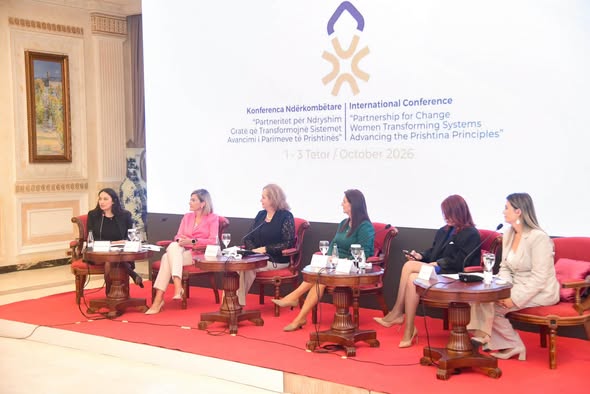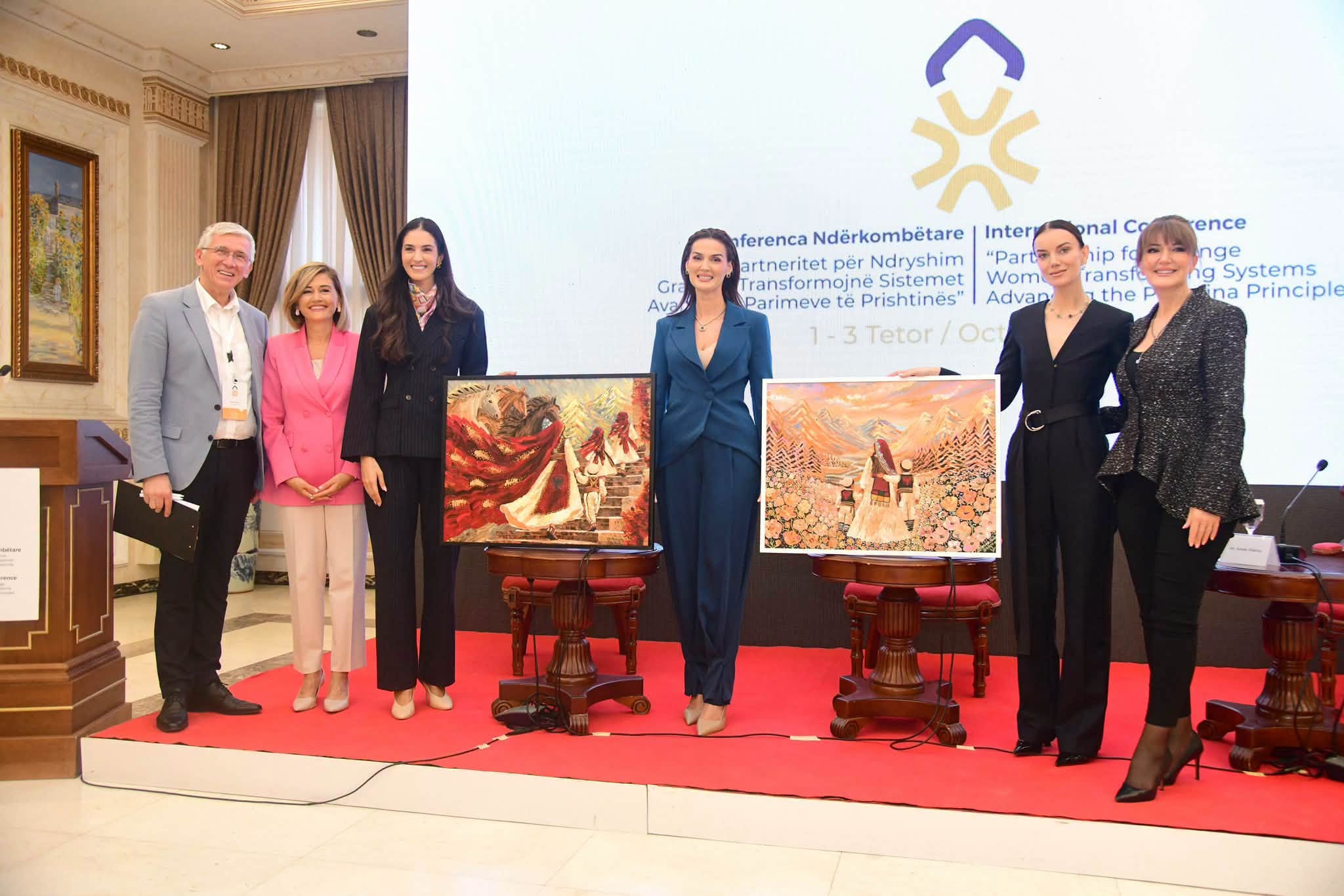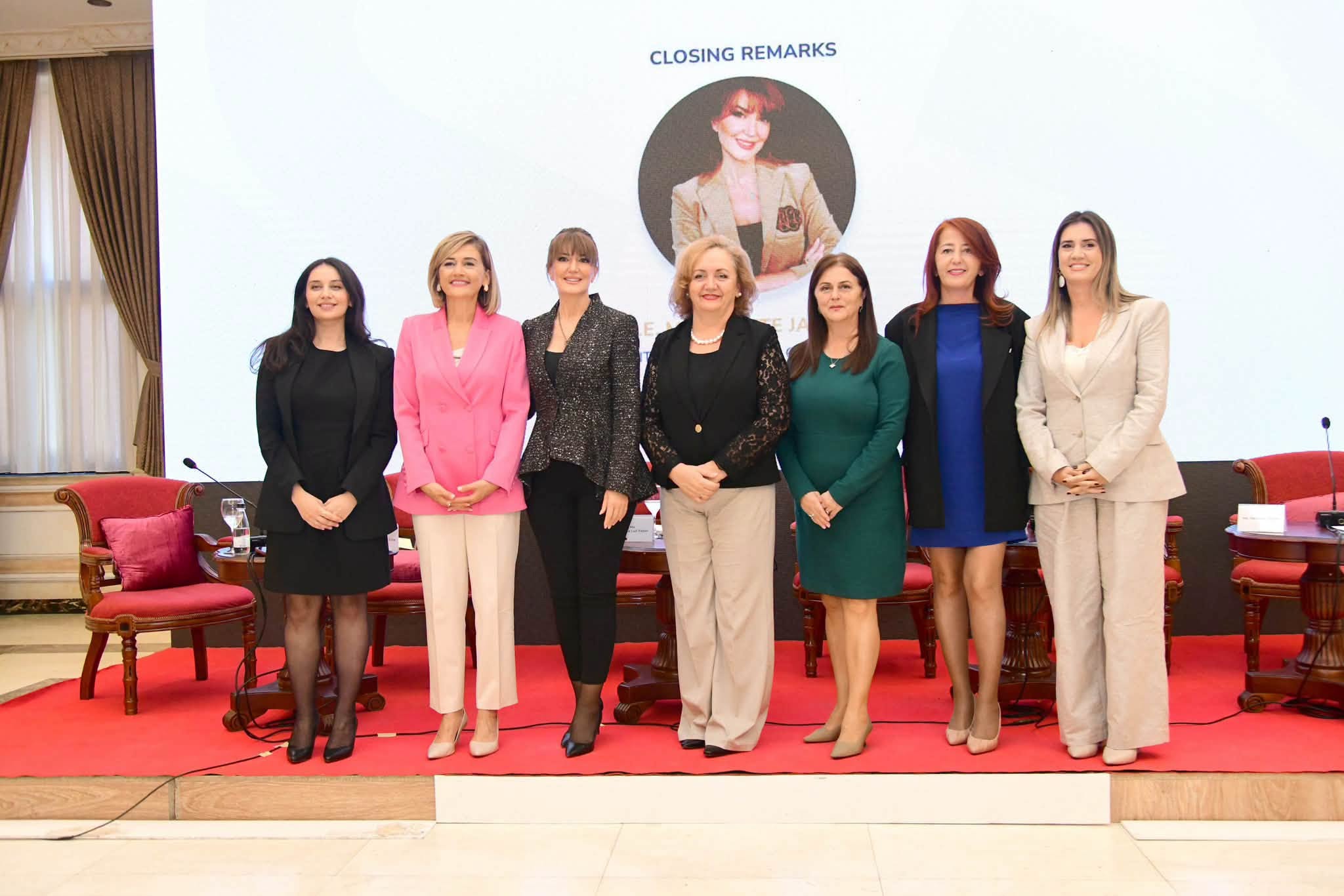
Minister Mimoza Kusari-Lila participates in the closing panel, together with women entrepreneurs, diplomats and innovators, at the conference “Partnership for Change: Women Transforming Systems”, at the invitation of the Jahjaga Foundation.
She emphasized that 14 years ago, in 2012, President Atifete Jahjaga placed women’s empowerment on an important institutional and international agenda for Kosovo, recalling that in February of that year, the first National Action Plan for the implementation of UN Security Council Resolution 1325 “Women, Peace and Security” was adopted, while in October, President Jahjaga organized the International Women’s Summit “Partnership for Change: Women’s Empowerment” in Prishtina, bringing together more than 200 leaders from Kosovo and around the world. The Prishtina Principles emerged from this summit, affirming women’s right to full and equal participation in decision-making, security and economic development.
Minister Kusari-Lila emphasized that today, 14 years later, it was a pleasure to participate in the closing panel, together with women entrepreneurs, diplomats and innovators, at the conference “Partnership for Change: Women Transforming Systems”, at the invitation of the Jahjaga Foundation.
She added that at a time of rapid technological change, preserving human values, adapting systems and creating solutions based on the principles of equality and security remain at the core of our actions as decision-makers, entrepreneurs and innovators.
Regarding support for and empowerment of women, the Minister stated that at MIETI and in the Government of Kosovo, our decisions and actions aim to ease the social burden on women and men, but also to introduce affirmative measures that create more opportunities for women in entrepreneurship.
According to the Minister, a dedicated Division for Women Entrepreneurs has been established within the new Agency, from promoting and presenting women-owned businesses through the “She Rises” platform, to financial support and professional services, the goal is the same: to create conditions that enable women not only to enter the economy, but also to have the space to lead, innovate and create new jobs.
According to her, leadership is not measured only by the position one holds, but by the weight of one’s vision and the commitment to advancing an agenda that is greater than a mandate.
She said that we must keep this agenda active, develop it and take it further, emphasizing: “Not at the periphery of development, but at its heart.”